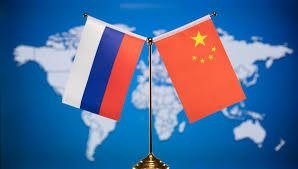
Russia and China are expanding alternative payment arrangements that allow banks to offset bilateral trade obligations without routing the full value of transactions through SWIFT or Western correspondent banks. The mechanism, known as the China Track, enables export earnings to finance imports through participating banks and payment agents. Growing Russian gold exports to Hong Kong have also raised questions about whether bullion could provide an additional way to settle outstanding trade balances.
The China Track was established by major Russian banks to facilitate China-related transactions. Participating banks centrally reconcile outstanding payment obligations, allowing export proceeds to be used against import costs. For example, if China purchases $100 million worth of Russian oil while Russian companies import $80 million in Chinese machinery, the obligations can be offset. Only the remaining $20 million needs to be settled.
Russia’s financial watchdog chief, Yury Chikhanchin, described the arrangement to President Vladimir Putin in July 2025, explaining how exporters could make proceeds available to importers before transactions were reconciled domestically. Reuters had also reported on the development in April 2025. Meanwhile, Hong Kong imported approximately 100 tonnes of Russian gold during the first seven months of 2026, nearly three times the volume recorded during the same period in 2025, according to the trade data cited in the report. Much of the gold subsequently moves to mainland China.
This has prompted speculation that bullion could help settle residual trade balances after banking obligations are offset. However, there is no publicly available evidence establishing how much of the gold reaches mainland China or whether it is used for bilateral trade settlement. Neither country has announced a gold-backed settlement arrangement. Russia's gold sales also have a domestic fiscal dimension. Central Bank Governor Elvira Nabiullina said in September 2026 that declining gold reserves were primarily linked to Finance Ministry operations involving the National Wealth Fund under the country's budget rule.
Russia and China are reducing their dependence on Western financial infrastructure by changing how bilateral trade payments are reconciled, rather than relying entirely on conventional cross-border transfers. Bank netting is a documented mechanism, while gold's possible role in settling remaining obligations is still unconfirmed. The distinction matters: rising gold exports do not, by themselves, establish the existence of a gold-backed payment system.